
Blessed be the God and Father of our Lord Jesus Christ! According to his great mercy, he has caused us to be born again to a living hope through the resurrection of Jesus Christ from the dead (1Peter 1:3 ESV).
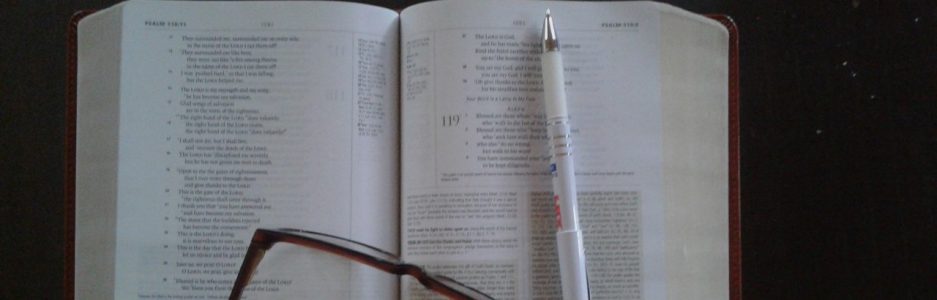
This week, as part of my personal devotional time, I commenced reading of the first epistle of Peter to the exiled believers in Pontus, Galatia, Cappadocia, Asia, and Bithynia (v.1). This morning, while reading over again, I paused on 1 Peter 1:3 and thought to myself; “that sounds Pauline”. And what I had in mind was Ephesians 1:3.
Blessed be the God and Father of our Lord Jesus Christ, who has blessed us in Christ with every spiritual blessing in the heavenly places.
See the similarities in doxology? That prompted me to read the introduction to the book (which I should have done before starting the book). I guess most of us take for granted that part of our study of the word. We ignore the introduction which gives information about authorship, timelines, purpose and recipients of a biblical book. Going back to read the introduction, I found I wasn’t alone in thinking Pauline authorship or seeing similarities in Peter and Paul. The epistle is thought of, among some scholars, to be pseudonymous (falsely ascribed to Peter).¹ Five points against Petrine authorship are listed as below;
(1) the cultivated Greek of the letter could not have been written by a Galilean fisherman, (2) the theology is too much like Paul’s to be ascribed to Peter, (3) the OT citations come from the Greek OT(septuagint), but the genuine Peter would have cited the Hebrew OT; (4) the background of the letter reflects the reign of the Roman emperors Domitian (A.D. 81-96) or Trajan (98-117), both of whom reigned after Peter’s death and (5) the genuine Peter would have referred more to the historical Jesus.²
Despite these objections to Petrine authorship, six arguments for Petrine authorship are also advanced:
(1) Peter was a middle-class fisherman who very likely knew Greek from his youth, (2) Although the common elements in the theology of Peter and Paul should not be exaggerated (for there are distinctive themes in Peter; e.g the particular emphasis on suffering), it should not be surprising that Peter and Paul shared the same theology, (3) It is hardly unexpected that that Peter would cite the Greek OT in writing to Greek readers, (4) There is no clear evidence that the letter was written under the reign of Domitian or Trajan, (5) the reader must be careful of saying what an author “must do”; i.e., although one cannot demand that Peter refer to the historical Jesus in a short letter written for a specific purpose, therr is significant evidence that Peter alludes to some of the sayings of Jesus (e.g Luke 12:35 in 1Pet 1:13; Matt.5:16 in 1Pet. 2:12; Matt.5:10 in 1Pet 3:14). (6) Finally there is no historical evidence in early church history that pseudonymous books, especially letters, were accepted as authoritative and inspired. Indeed, writing in someone else’s name was considered deceptive…”³
Having said all these, this article is not to argue Petrine authorship though I have no doubt about it. I will leave that to New Testament textual critics of which I am no expert. What struck me however between 1 Peter 1:3 and Ephesians 1:3 is that for both Paul and Peter, salvation proceeds from God.
The Doctrine of Election
Firstly, in Peter’s theology, it is God who “caused us to be born again.” For Paul also, it is God who “chose us in him before the foundation of the world.” In Peter’s opening words, he clearly identified who he was writing to: “To those who are elect “(v.1). That is the doctrine of election. Paul also spoke of this same doctrine using words such as “chose, predestined before the foundation of the earth.” The doctrine of election is one of the hotly debated topics among Christians. Has God determined before hand those who will be saved (Calvinism) or God knew those who will have faith in him and based on that, he chose them (Arminianism). I am of the Calvinistic view.
However, regardless of where one stands on the subject, election as a doctrine must be upheld for Scripture teaches the doctrine of election. Our interpretations might differ, but the final decision for salvation is God. Again, Peter in his epistle speaks of how this election occured: “according to the foreknowledge of God the Father” (v.2). Paul speaks of this as done “according to the counsel of [God’s] will” (Eph. 1:11). Clearly, God has a people he calls his elect. The Bible does teach about election and we must not run away from the subject. J. C. Ryle says this better: “Is Election in the Bible, or is it not? Does the Bible speak of certain people as God’s Elect, or not?”
Salvation Is Trinitarian
As you read Paul and Peter, one fact of the Christian faith emerges and that is, salvation is Trinitarian in that it is a work done by the truine God. Peter says: “according to the foreknowledge of God the Father, in the sanctification of the Spirit, for obedience to Jesus Christ and for sprinkling with his blood.”(v.2). This is to say our salvation is a work done by God the Father, through Jesus the Son and the faith to believe applied to our hearts by the Holy Spirit. Paul says same identifying Father, Son and Holy Spirit as involved in our salvation (Eph 1:2-14). Again, in salvation; we are kept by the power of God through the Holy Spirit (1Pet 1:4; Eph. 1:14).
Jesus is God’s only way of salvation
Salvation comes to the sinner only through faith in the work of Christ: his death and resurrection. Peter says the salvation of the elect is “through the resurrection of Jesus Christ from the dead” (v.3). Of course he has to die before he can resurrect and the resurrection is a fundamental Christian doctrine which anyone who denys cannot be a Christian. Paul also speaks of salvation been through Christ: “adoption to himself as sons through Jesus Christ” (Eph.1:5). He also speaks of Christ’s resurrection (Eph 1:20)
The Gospel Is One
It is no wonder Paul and Peter have the same themes running through their message. This points us to only one gospel message hence Paul and Peter couldn’t be contradicting themselves in the same message about the same person– Jesus Christ. Indeed, when Christ spoke; he spoke of these same themes of God having an elect people. In his High Priestly prayer, Jesus spoke of a people the Father has given him: “I have manifested your name to the people whom you gave me out of the world. Yours they were, and you gave them to me, and they have kept your word.” (John 17:6; c.f John 6:44). Christ also spoke of our salvation in a Trinitarian sense that The Father sent the Son to die so that whoever will believe will have life (John 3:16). Prior to this, he had spoken of how the Spirit is behind our regeneration. Just as it is in the natural world that we have no power to be born, in the spiritual world we equally have no power to be born again. God must change our hearts: “unless one is born of water and the Spirit, he cannot enter the kingdom of God. That which is born of the flesh is flesh, and that which is born of the Spirit is spirit” (John 3:5-6).
In concluding, if you are a Christian, it is all a work of the Sovereign grace of God. Peter taught this. Paul taught same. And of course they got their message from their Lord and our Lord — Jesus Christ.
Notes
1. Thomas R. Schreiner, “The First Letter of Peter” in The ESV Study Bible: English Standard Version, ed. Wayne Grudem (Wheaton:Illinois, Crossway, 2008), 2401
2. Schreiner, “The First Letter of Peter”, 2401
3. Schreiner, “The First Letter of Peter”, 2401
Discover more from Grace and Truth
Subscribe to get the latest posts sent to your email.


Thanks for following my blog; you are very kind.
LikeLiked by 1 person
You welcome. God bless you for following mine too.
LikeLiked by 1 person
Thank “you.” You are a blessing.
LikeLike