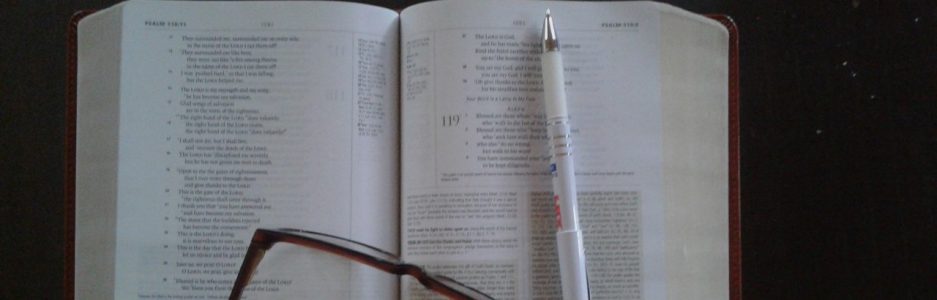

Just this Saturday, 18th August, 2018, I was at the funeral of a youngman in my neighbourhood who sadly passed on after a short illness. In this same Saturday, the death of the former UN secretary General Kofi Annan was announced. Now during this funeral, 1Corinthians 15 was read and portions of it made a profound impression upon me concerning the certainty of the Christian faith and especially the resurrection of the dead as that was primarily what Paul was addressing. The text was read in Twi¹ and I supposse that may have contributed to its effect on me such as hearing a biblical passage in words so strong in my own mother tongue. Robert Kwasi Aboagye-Mensah’s words perhaps will throw more light on the power of the word in the mother tongue. He says,
God speaks to our hearts, minds and innermost being in a way that another language can only do in approximation. We we hear the Bible read in our mother tongue, suddenly we realise that God speaks our language too…To understand this excitement one must turn to Acts 2 and the account of the Day of Pentecost when the Holy Spirit came to the people who had gathered ‘from every nation under heaven.’ The crowd was bewildered ‘because each one heard them speaking in his own language
I will now attempt to express the profoundity in the words I experienced through the points that follow in the rest of the article ( Please note I will quote biblical texts in Twi and English).
The Certainty of The Preached Word.
Firstly, as I have already said, the main defense Paul was putting up in this text was the resurrection of Christ. He says a lot of things from verse 1. But from verse 14 where my attention was piqued at the funeral, Paul says “na sɛ wɔannyane Kristo a, na yɛn asɛnka yɛ ɔkwa, na mo gyidie nso yɛ hunu” (And if Christ has not been raised, then our preaching is in vain and your faith is in vain.) (v.14). What he is saying is that, if Christ was not raised from the dead, then their preaching of the gospel is in vain likewise the faith of the people. The gospel, the good news of Christ is the hope by which every sinner will be saved. And the basis of the gospel and the faith we hold is in the certainty of the resurrection.
The Certainty of The Resurrection
The Christian message, following from the first point is not a make belief; but a message grounded in historical events. The crucifixion and resurrection of Christ are authentic events and hence we can trust the events as they are recorded in Scripture. The resurrection is the reference point upon which all our hope hinges. Paul says that “Na wɔbɛhu yɛn sɛ Nyankopɔn ho adansekurumfoɔ, ɛfiri sɛ yɛdii Onyankopɔn adanseɛ sɛ, ɔnyanee Kristo a sɛ awufoɔ nnyane a, anka wannyane no (We are even found to be misrepresenting God, because we testified about God that he raised Christ, whom he did not raise if it is true that the dead are not raised.”(v.15). That word “adansekurumfoɔ” in English can be translated as false witnesses or liars who testify that God raised Christ from the dead when he didn’t.
Here the Apostle Paul puts his neck out and that of the other apostles and says if Christ was not raised from the dead but we say he was, then we are liars—false witnesses. These are very strong words indeed. The Apostle puts his intergrity on the line and says if Christ was not raised from the dead then we are liars. Considering all we know about Paul, how he, prior to his conversion hated Christians and persecuted them, it is unlikely this same man will testify about something he hated so much if it were not true. Of course we know what happened to him. He encountred Christ on one of his journeys to persecute Christians. He gave his own testimony in Acts 26:10-18 while he stood trial for what he believed:
I not only locked up many of the saints in prison after receiving authority from the chief priests, but when they were put to death I cast my vote against them. And I punished them often in all the synagogues and tried to make them blaspheme, and in raging fury against them I persecuted them even to foreign cities. “In this connection I journeyed to Damascus with the authority and commission of the chief priests. At midday, O king, I saw on the way a light from heaven, brighter than the sun, that shone around me and those who journeyed with me. And when we had all fallen to the ground, I heard a voice saying to me in the Hebrew language, ‘Saul, Saul, why are you persecuting me? It is hard for you to kick against the goads.’ And I said, ‘Who are you , Lord?’ And the Lord said, ‘I am Jesus whom you are persecuting. But rise and stand upon your feet, for I have appeared to you for this purpose, to appoint you as a servant and witness to the things in which you have seen me and to those in which I will appear to you, delivering you from your people and from the Gentiles— to whom I am sending you to open their eyes, so that they may turn from darkness to light and from the power of Satan to God, that they may receive forgiveness of sins and a place among those who are sanctified by faith in me.’
If a man who once persecuted people for believing in Jesus Christ now embraces the faith, I think he deserves a hearing and what he says in favour of what he once persecuted ought to be listened to.
The Certainty of Eternal Life
Another part of the text which piqued my interest was the verse 19: “Sɛ nkwa yi mu nko ara na yɛwɔ Kristo mu anidasoɔ a, ɛnneɛ na yɛne nnipa nyinaa mu mmɔborɔfoɔ.” (If in Christ we have hope in this life only, we are of all people most to be pitied.”) This text speaks of hopelesness for those who believe in Christ if indeed all their hope is earthly–this side of eternity only. The word “mmɔborɔfoɔ” depicts people who are hopeless and to be “pitied.”
Here is a certainty of eternal life and of the resurrection. Our hope in Christ transcends this life. As believers, we have hope that one day we will see our loved ones who have gone ahead to be with the Lord and most importantly, we shall see our Lord; the One who though we have not seen, we love and believe (1Pet. 1:8). If all these are lies, then we might as well cast off our hope and join the world in living to please ourselves. But as Christians, we have certainty in the Scriptures that its teachings are the very words of God and in those words we have hope of eternal life. Our loved ones who died in Christ have not died in vain because Christ’s resurrection gives us a certainty of hope that one day we shall see our loved one. So with confidence we can say to all those who have departed this world as Christians that “Rest in Peace” for indeed “…whoever has entered God’s rest has also rested from his labour” (Hebrews 4:10).
If you are mourning any departed soul who was a Christian, be encouraged that one day at the resurrection we shall see our loved ones and be united together. Be assured also that they are at a better place in the presence of God. If you are reading this and not a believer, know that the certainty of these things puts you in enmity with God through unbelief. Seek Christ now and be united with him in faith. The gamble is risky. You will wake up one day out your body faced with the reality of what the bible teaches and then you realise you have squandered all opportunities to reconcile with God (Hebrews 9:27).
Notes:
1. Twi is a dialect of Akan language (Asante, Akuapem and Fante) spoken by people in southern and central Ghana.
2. Robert Kwasi Aboagye-Mensah, Dynamics of Preaching The Word: God still Speaks ( Legon:Accra, Adwinsa Publications, 2013), 5
Discover more from Grace and Truth
Subscribe to get the latest posts sent to your email.


Great Piece. I happened to be at the funeral you made reference to.Thanks for the Biblical exposition. Kudos
LikeLiked by 1 person
Thanks for making the time to read. A very sad event indeed and I pray strength for the family.
LikeLike
You always amaze me. Your thoughts are so clear and help me clear up my own thoughts, knowing I have the Truth in my mind and heart. Thank you
LikeLike