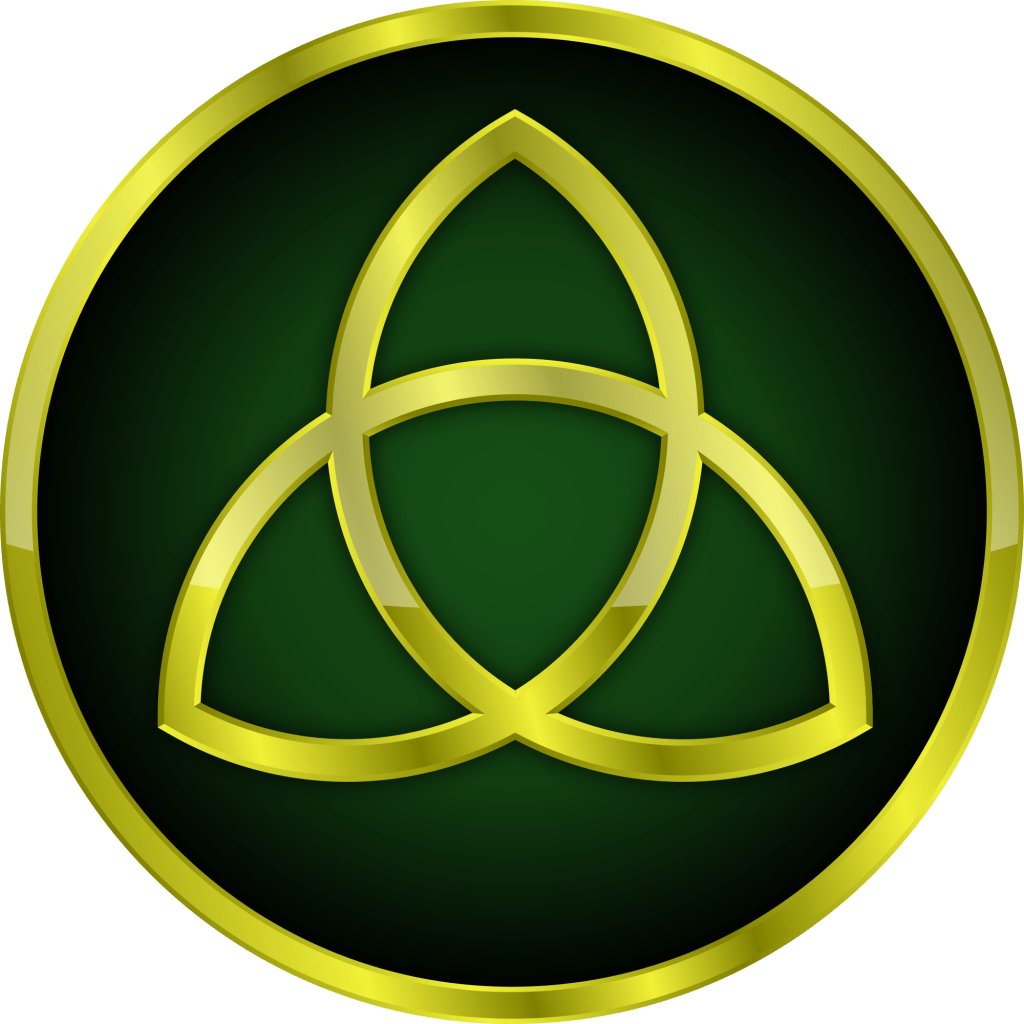
The hymn “Holy, Holy, Holy! Lord God Almighty” a popular hymn by Reginald Heber, is a melodious melody teaching God’s majesty through music and the doctrine of the Trinity– one of Christianity’s cherished and treasured tenets. Whenever Christians sing this hymn, we are affirming among other doctrines, God’s Holiness, Omnipotence, Mercy, and the blessed Trinity.
Holy, holy, holy! Lord God Almighty
Early in the morning Our song shall rise to Thee
Holy, holy, holy! Merciful and mighty
God in three Persons, blessed Trinity
God, has, in His self-revelation revealed himself in Scripture as a Triune God—Three in One or Tri-Unity. This divine self-revelation necessitates believers believe in the doctrine of the Trinity. In an online article, Kevin DeYoung noted that “If any doctrine makes Christianity Christian, then surely it is the doctrine of the Trinity. The three great ecumenical creeds—the Apostles’ Creed, the Nicene Creed, and the Athanasian Creed—are all structured around our three in one God, underlying the essential importance of Trinitarian theology“¹
DeYoung in these words points to the historical affirmation of the doctrine of the Trinity in Christian history. This doctrine is perhaps the most criticised Christian doctrine. The question often rises: “where can it be found in the Bible?” A point of clarity on that will be useful at this point.
The word trinity is never found in the Bible, though the idea represented by the word is taught in many places. The word Trinity means “tri-unity” or “three-in-oneness”. It is used to summarize the teaching of Scripture that God is three persons yet one God²
Definition
There are three persons in the Godhead; the Father, the Son, and the Holy Ghost; and these three are one God, the same in substance, equal in power and glory.³
Oneness of God
In the definition, note the clarifying phrase: “…and these three are one God.” This underscores the fundamental Christian belief in One God, not three. There is an event in John 5:18-30 which presents us with information to look at the Trinity. Jesus healed a man engendering a controversy between himself and the Jews. They challenged Jesus’ authority, which was further aggravated by him asserting equality with God: “…he was even calling God his own Father, making himself equal with God.” (John 5:18c). There was no doubts in the minds of the Jews. Jesus, in their view, claimed divinity. And they were right.
Considering the strict monotheism from passages like Deuteronomy 6:4-6, the Trinity can be a confounding confusing concept, leading to a conclusion by some that Christians worship three gods. However, at the core of Christian faith is the belief in One Divine Essence shared by three co-equal, co-eternal Persons—Father, Son, and Holy Spirit, what the apostle Paul calls the Godhead (Colossians 2:9 KJV).
This understanding is not tritheism, but Trinitarianism, illuminating for us the Biblical insight into the nature of God’s Tri-Unity. Christians thus are monotheists embracing the mystery of our Triune God.
One, Yet, Distinct
God has revealed himself as three distinct persons in Scripture: Father, Son, and Holy Spirit. In the conversation between Jesus and the Jews (John 5), a clear distinction is drawn between “The Father and The Son,” illustrating that while they are one God, they are distinct persons:“My Father is working until now, and I am working.” (John 5:17b). This distinction is central to an understanding of the Trinity as each divine Person plays a unique role in accomplishing redemption for sinners. The relationship between the Father and the Son is profound, as shown when the Father loves the Son and reveals His works to Him (John 5:20).
This points to us that that all promises made by God in the Old Testament, pointing to the coming of the Lord Jesus Christ, were fulfilled in Him. Jesus lived a perfectly sinless life, fulfilling God’s commandments—something none of us could achieve. He came to make substitutionary atonement for sins, thereby redeeming and reconciling rebels to a relationship with Himself. This is a vital implication of the Trinity: God fulfilled His promise in sending a Saviour, in saving His people from their sins (Genesis 3:15).
The Blessed Trinity in Creation
The creation narrative hints at the reality of the Trinity. The term “Elohim” used in Genesis 1 is plural, suggesting a multiplicity of persons within the Godhead. During creation, “the Spirit of God was hovering over the face of the waters,” and God said, “Let there be light,” introducing the Word and the Spirit alongside God (Genesis 1:1-3). John echoes this in his gospel: “In the beginning was the Word, and the Word was with God, and the Word was God” (John 1:1). Thus, we see God, the Word, and the Spirit actively involved in creation.
Genesis 1:26 states, “Let us make man in our image, after our likeness.” The use of “us” and “our” raises the question: Who was God speaking to? Wayne Grudem argues that this cannot be a plural of majesty or a conversation with angels, as humans were not made in the image of angels, nor do angels share in God’s creative acts. The most convincing explanation is the presence of a plurality of persons in the Godhead.⁴
The Blessed Trinity in the New Testament
The Trinity is fully revealed in the New Testament. God presents himself as Father, Son, and Holy Spirit. The salvation of sinners is a Trinitarian work . The Father purposed the redemption of his elect, the Son died to redeem them, and the Holy Spirit regenerates their heart to believe by applying Christ’s work to their hearts. Baptism is also presented to us in Trinitarian language: “…baptizing them in the name of the Father and of the Son and of the Holy Spirit” (Matthew 28:19).
Anytime the benediction of 2 Corinthians 13:13 is pronounced, it is an affirmation of the Trinity: “The grace of the Lord Jesus Christ and the love of God and the fellowship of the Holy Spirit be with you all” (2 Corinthians 13:14). Further, Peter explains what happens in salvation in Trinitarian language. He says we are saved “according to the foreknowledge of God the Father, in the sanctification of the Spirit, for obedience to Jesus Christ and for sprinkling with his blood” (1 Peter 1:2).
Three, One, and Equal
In Trinitarian taxonomy, succinctly captured in “God in three persons, blessed Trinity“, all three persons of the Godhead are fully God and equal. The Father is no more God than the Son or the Holy Spirit. The Westminster Shorter Catechism affirms that the members of the Trinity are same in “substance, equal in power and glory”. Jesus tells the Jews “the Son can do nothing of his own accord, but only what he sees the Father doing. For whatever the Father does, that the Son does likewise.”
Jesus wasn’t confessing an inability but equality and pointing to the unity in operation with the Father in the work of redemption. “There is one body and one Spirit—just as you were called to the one hope that belongs to your call— one Lord, one faith, one baptism, one God and Father of all, who is over all and through all and in all (Ephesians 4:4-6).
Practical Implications
The doctrine of the Trinity has implications for our lives as believers. It is a model for unity among believers. Jesus prayed: “That they may all be one, just as you, Father, are in me, and I in you, that they also may be in us, so that the world may believe that you have sent me.” (John 17:21).
The unity reflected in the Trinity must be seen amongst believers. We don’t just meet for fellowship. We reflect God’s tri-unity and shows the world the testimony of our God. Paul echoes this in his teachings, reminding us that though we are many, we are one body in Christ. Our gatherings are an opportunity to reflect the love of God by loving one another. The same love expressed in the Trinity is the same love the Father extends to us, and through us, to one another: “I in them and you in me, that they may become perfectly one, so that the world may know that you sent me and loved them even as you loved me.”
Notes
- Kevin DeYoung, Clearly Reformed,The Doctrine of the Trinity: No Christianity Without It, https://clearlyreformed.org/the-doctrine-of-the-trinity-no-christianity-without-it/
- Wayne, Grudem. Systematic Theology: An Introduction to Biblical Doctrine. Leicester: Inter-Varsity Press, 1994.
- The Westminster Shorter Catechism, Q&A 6
- Wayne, Grudem. Systematic Theology: An Introduction to Biblical Doctrine. Leicester: Inter-Varsity Press, 1994.
Discover more from Grace and Truth
Subscribe to get the latest posts sent to your email.


